
How to Stock Your First College Kitchen (Complete Checklist)
Inside: Everything you need to stock a college apartment kitchen — pantry staples, fridge and freezer essentials, and must-have kitchen equipment. A complete checklist from a dietitian-mom.
Moving into your first college apartment can be thrilling. No more dorm bunk beds, RAs, and shower shoes!
Then sometime between move-in day and the first grocery run, it hits you: I have to feed myself now.
If you’re a student, you’re probably equal parts excited and overwhelmed. If you’re a mom, you might be wondering if your kid will live on energy drinks and ramen without the safety net of the dining hall.
I had those worries about my kid when he moved into a rental with friends his junior year of college. But he ended up embracing the change. He regularly cooked, researched recipes online, and even included veggies in most of them.
Eating well in a college rental doesn’t require a tricked-out kitchen or a culinary degree. You just need some smart ingredient staples, a handful of basic cooking gear, and a plan.
This guide covers it all: the kitchen equipment worth buying (and skipping), what to stock in your fridge/freezer/pantry, and some simple recipes to get you started.
Kitchen Equipment: The Essentials
I promise: You need less than you think.
Must-haves:
- Chef’s knife: Spend a little more here, it will save you time and frustration!
- Paring knives: You’ll use them to cut fruits and veggies
- Cutting board: Get at least one large one.
- Medium saucepan (2-3 quarts): For pasta, soups, and sauces
- Large pot (4-6 quarts): For cooking a full pound box of pasta or a big batch of soup
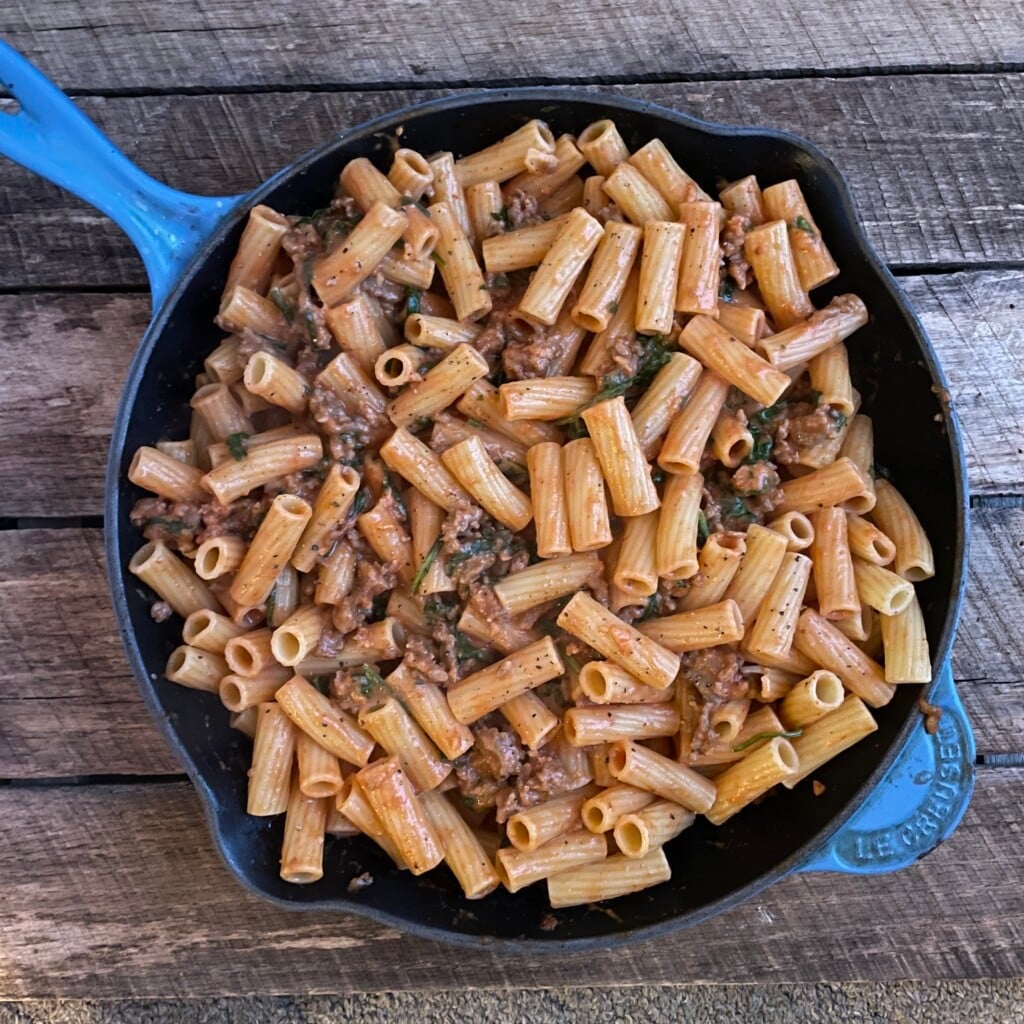
- Skillet or frying pan (10-12 inches): For eggs, stir-fries, and quesadillas. Look for ceramic or cast iron, and avoid pre-owned non-stick skillets, which are usually chipped and scratched.
- Baking sheet: For cookies and sheet pan dinners
- Wooden spoons and silicone spatulas
- Measuring cups and spoons
- Can opener: Manual is fine
- Colander or strainer
- Mixing bowl: Get at least one large one
- Food storage containers: Saving leftovers and meal prepping are both smart money-saving moves. Choose glass when you can.
Might be a must-have:
- Blender: If you like smoothies, you’ll need this.
- Air fryer: This is great for quickly cooking chicken and salmon, veggies, and frozen foods like French fries and chicken tenders.
- Coffee maker: If you’re a coffee drinker, making it at home will save you loads of money.
Nice to have:
- Toaster oven
- Second baking sheet
- Whisk
- Muffin tin
- Tongs
- Vegetable peeler
- Meat thermometer
Consider skipping:
- Single-use appliances: Ice cream makers, rice cookers, and waffle irons take up a lot of space. Skip these unless you know you’ll use them regularly.
- Specialty cookware: Woks, springform pans, and crepe pans seem fun but likely won’t be used much.
- Salad spinner: These tend to be large and unwieldy. Save time and space by buying pre-washed greens.*
- Knife block: This gobbles up precious countertop real estate. Keep a chef’s knife and a couple of good paring knives in a drawer.
- Stand mixer: If you like to bake, keep a smaller hand mixer in a cupboard instead.
*Always follow public health advice on food safety. At the time of publication, pre-washed greens are not recommended due to a Cyclospora outbreak.
A Note on Budget
- Look for secondhand gear: Your local thrift store is likely stocked with a lot of perfectly usable pots and pans and other tools for a fraction of the cost. Look at Facebook Marketplace too.
- Prioritize one good knife: A sharp knife is safer and more useful than a drawer full of dull ones.
- Build your pantry gradually: Buy what you need for meals you’re actually going to make.
- Generic and store brands are almost always fine: No need to spend a lot on things like beans, pasta, oats, and oil. Get my healthy grocery list for ALDI.
Pantry Staples
Here are the shelf-stable ingredients that will be the backbone of meals and snacks. Stock these in your pantry and cupboards, and add them gradually as you figure out what you actually like to make.
Grains
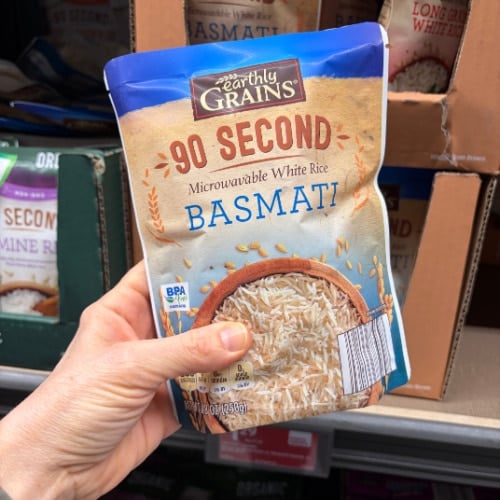
- Rice (boxed, bagged, or pre-cooked pouches to save time)
- Dry pasta or pre-cooked pasta in pouches
- Tortillas: Use for tacos, burritos, wraps, and improv pizzas
- Whole grain bread: For sandwiches, avocado toast, and French toast
- Oats: Buy a big tub instead of packets–it’s cheaper!
- Ground flaxseed and chia seeds: To add to smoothies, oatmeal, and yogurt
- Popcorn kernels: Cheap, whole grain, and makes a ton (here’s how to make it)
- Cereal: Ideally, look for varieties with at least three grams of fiber per serving (here are healthy picks)
Proteins
- Canned or pouch tuna and/or salmon: High-quality protein to throw onto salads, sandwiches, or pasta
- Peanut butter (or other nut/seed butters): Cheap and endlessly useful
- Canned beans (such as black beans and pinto beans): Cheap and protein-packed for burritos and tacos or to mix with rice
- Canned soup: Solid backup and great for sick days
- Jerky: Shelf-stable, rich in protein, and a satisfying snack to grab
- Canned or dry lentils: Cheap and loaded with protein (here’s a recipe for lentil soup)

Produce that keeps
- Canned fruits and vegetables: Shelf-stable and ready when you need them
- Potatoes: Microwave a whole one in about 8 minutes (poke holes in it first)
- Bananas: Cheap, portable, and if they get too brown, toss them in the freezer for future smoothies
- Onions: The flavor foundation for so many recipes
Sauces, oils, and flavor
- Salsa: Use as a dip or sauce
- Soy sauce: Flavor boost for stir-fries and rice
- Jarred sauces: Try teriyaki, curry, and pesto to make your meals more flavorful fast
- Broth: Chicken, beef, or vegetable to use for soups, sauces, and cooking rice
- Salad dressing: For topping salads or using as an easy marinade
- Healthy oil: Look for olive, avocado, coconut, and canola
- Jarred pasta sauce: For quick pasta or as a swap for pizza sauce
- Cooking spray
Spices
- Start with salt/pepper, garlic powder, onion powder, Italian seasoning, paprika, and cinnamon
Baking and sweeteners
- Honey: Use in oatmeal, smoothies, sauces, and in tea when you’ve got a cold
- Maple syrup: For pancakes, French toast, or a swap for honey
- Vanilla extract: A small bottle lasts a long time
- Baking soda: For baking and doubles as a deodorizer!
- Baking powder: You’ll want this if you’re making pancakes, waffles, or muffins

Fridge Staples
- Eggs: Affordable protein source (don’t toss the yolks, they contain protein too!)
- Milk: Choose dairy or plant-based (soy milk has as much protein as dairy)
- Yogurt or Greek yogurt: Buy a large tub if you can (it’s cheaper)
- Cheese (shredded, string, or blocks): Because everything’s better with cheese
- Cottage cheese: Packed with protein. Use in my protein pancake recipe.
- Hummus: Eat as a dip or spread on sandwiches instead of mayo or mustard
- Pre-washed greens: You’re more likely to eat salads if they’re quick and easy
- Pre-washed veggies: Think baby carrots, sugar snap peas, and celery
- Tofu: A great plant-based protein source (use in my Crispy Tofu recipe)
- Fresh fruit that keeps well: Stock apples, oranges, pears, and clementines
- Butter: For cooking, baking, and toast

Freezer Staples
- Frozen vegetables: Use in stir-fries, pasta, and soup
- Frozen fruit: Great in smoothies and oatmeal
- Frozen meatballs: Good for pasta or Meatball Subs
- Frozen edamame: This makes a great high-protein snack
- Frozen protein staples: Chicken breasts, salmon fillets, ground beef, veggie burgers
- Frozen meals: Stock a few, like single-serve burritos or heat-and-eat meals, for extra-busy days
What to Cook
Now that your kitchen is stocked, here are a few simple recipe to make.
Breakfasts
Lunches

Dinners
Remember: You don’t need the perfect college kitchen to eat well. You just need some basics, a little bit of a plan, and a willingness to figure it out as you go. That’s how most of us learned how to cook–and you will too!


