
What to Do When Everyone Wants Something Different For Dinner
Inside: Here are some practical, judgement-free strategies for feeding a family with different food preferences–without being a short order cook.
It’s 5:30 p.m. and you’re staring at an open fridge, wondering what to make for dinner.
One kid’s on a plain pasta jag. Another won’t eat anything green. Your spouse requests something protein-heavy. You just want a family dinner without whining, complaining, and barely touched plates.
If you’re feeding a family with different food preferences, you know that particular exhaustion of trying to please everyone around the dinner table, the frustration when your kids make that face, the impulse to just nuke some nuggets, slap together a PBJ, and call it a night.
Not to mention the sinking feeling that you’re doing this whole feeding-your-family thing wrong.
I’m here to assure you: You’re not doing anything wrong. You’re just dealing with one of the most universal challenges of feeding a family.
The good news is that there’s a middle path between being a short-order cook and a tough love “you’ll eat what I make and like it” approach. I know this not only as a registered dietitian, but also as someone who’s been on both sides of this table.
I was an extremely picky eater as a kid, largely existing on buttered noodles and canned tuna. My husband was finicky too and wouldn’t go near a vegetable. Thankfully, by the time we were parents, we’d grown out of much of that and wanted our kids to be more confident eaters than we were.
I tried a lot of different strategies over the years, but here are the ones that worked.
Why this happens (and why it’s normal)
Before we dive in, let’s just acknowledge something: Having completely different food preferences in one household is not a parenting failure. It’s not a sign that you’ve done something wrong.
Kids have developing palates that are genuinely more sensitive to bitter flavors. Partners bring their own food baggage and personal preferences to the table. And different people just like different things. That’s normal!
Our goal here is not to force everyone to like the same things but to make dinner work for your family most nights of the week without running out the back door screaming.
The ground rule: One meal for everyone
This is the foundational principle that makes all the strategies on this list work: We’re making one meal for the whole table, not separate meals for each person.
I know that might sound rigid, but here’s why it matters.
- You’ll save time and energy. When you’re not scrambling around like a short-order cook, you can sit and enjoy your dinner (a novel concept, I know!).
- There’s motivation to try new foods. If your kids are guaranteed chicken nuggets as a backup, they’ll never be motivated to actually try what everyone else is having. When there’s something easy and familiar waiting in the wings, there’s no reason to taste something new.
- Your kids will learn an important lesson. Every meal can’t be your favorite. You’ll eat a friend’s house, and the food won’t be what you’d choose. You’ll live with people who like different things. Learning to navigate this gracefully is a life skill.

Strategy #1: BYOD (Build Your Own Dinner)
The concept is simple: You’re still making one dinner, but you’re presenting it in separate components so everyone can build their own plate.
A lot of picky eaters (and adults for that matter) are much more receptive to food when they have control over what goes on their plate. Taking the foods and portions they want gives them a sense of ownership over the meal.
This is still just making one meal, you’re just letting everyone assemble it themselves. It’s a small shift in presentation but can make a big difference.
Here are some ideas:
- Taco Bar: Set out taco shells and tortillas, along with cooked chicken, beef, or fish, and toppings like shredded cheese, salsa, beans, lettuce, tomato, etc.
- Pizza Bar: Start with flatbreads, tortillas, or naan, plus pizza sauce, cheese, and various toppings. Let everyone build their own and then bake them under the broiler.
- Bowl Bar: Offer rice, proteins (like chickpeas or grilled chicken), various grilled and fresh veggies, and bottled sauces like teriyaki and yum-yum.
Try this recipe: Kid-Friendly Tofu Bowls with Peanut Sauce
You may be wondering…How long does it take for a picky eater to come around to a new food?
You may have heard that it can take 10-15 exposures before a child tries a new food. Truth is, it can take some children many, many more exposures. That’s okay. The key is to make those exposures pressure-free. A child who is forced to eat a food, or who has a stressful experience with it, may develop a negative association with that food. Serve it, don’t fight about it, rinse and repeat.
Strategy #2: The Deconstructed Dinner
This one is similar to the Build-Your-Own Dinner, but you can use it when the meal doesn’t lend itself naturally to self-assembly.
Here’s what you do: Make the meal as you normally would. But while you’re putting it together, quietly set aside some of the components, plain. Then, if someone announces they don’t want everything mixed together, a deconstructed version is available.
This isn’t extra work–you’re still making one meal. It’s just a small, extra step while you’re already cooking.
Here are some ways to make it work:
- Lasagna: Set aside a few plain cooked noodles, sauce, and cheese.
- Soup: Ladle out some plain broth and keep some noodles and veggies on the side.
- Stir-fry: Set aside some plain rice and cooked protein.
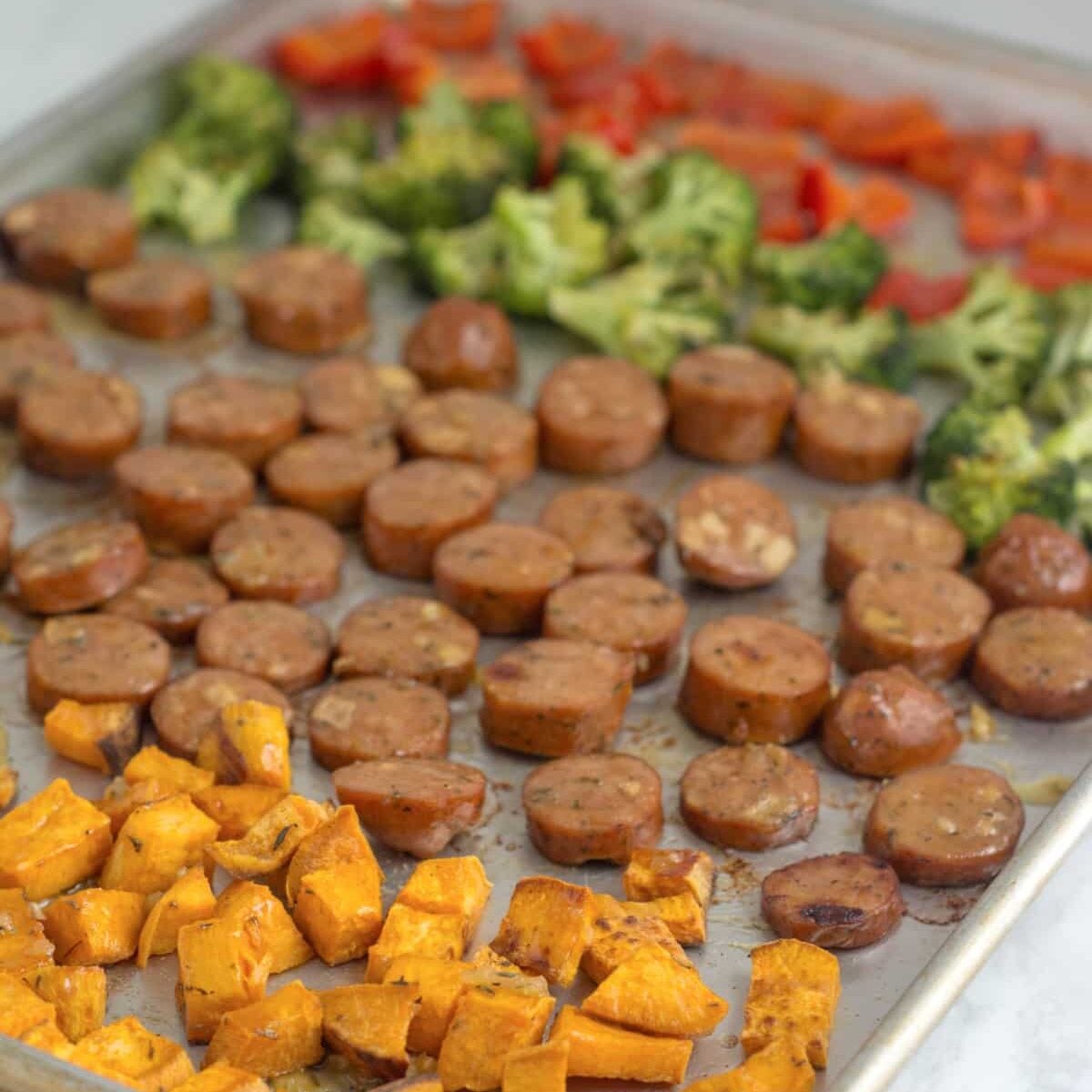
- Sheet pan dinners: Separating components on the baking tray makes this easy.
Try this recipe: Sheet Pan Chicken Sausage & Veggies with Maple-Thyme Drizzle
You may be wondering…Is it okay to make a separate meal for a child with extreme picky eating or sensory issues?
Every family is different, and the strategies and advice here aren’t one-size-fits-all rules. Some children with sensory issues or other challenges need different accommodations than those with garden-variety picky eating. If your child has an extreme case of picky eating, a pediatric dietitian or feeding therapist may be able to help you develop an approach that works for your specific child.

Strategy #3: The Safe Food
You just want to make something you love–but you know it’s going to go over like a lead balloon with your kids. Go ahead and make it because you deserve to have dinners you love too!
When deconstructing isn’t really an option, there’s still a way to be compassionate without being a chef on demand. Make sure there’s always at least one thing on the table that your picky eater will eat. This is something available to everyone, not special to just one person.
This might be:
- A basket of rolls
- A bowl of fruit salad
- Raw veggies and hummus
When your child (or spouse) says they don’t want the main dish, calmly remind them there are other things on the table. Then let it go.

Strategy #4: Favorites Night
Every once in a while, designate a week and let each person pick a dinner. This sends a powerful message: Everyone’s preferences matter and will be honored. And if your kid knows their favorite mac-n-cheese is coming Thursday, Wednesday’s fish tacos feel a bit less catastrophic.
Teach the “Every Meal Can’t Be Your Favorite” lesson
This is the mindset shift that makes all the strategies above sustainable over time.
Kids need to hear (preferably early and often) that not every meal will be their favorite. And that’s okay. That’s life. You’ll eat at a friend’s house and the food won’t be what you’d choose. You’ll go to parties where unfamiliar foods are served. You’ll live with people with totally different preferences.
Learning to make do with less-than-favorite foods is a life skill–and the dinner table is where they’ll learn it.
Case in point: I’ve been making chicken pot pie for years. There was a time when my son wouldn’t take a single bite. I kept making it anyway, without pressure, nagging, bribes, basically without making it “a thing”. Now he’s excited when we’re having pot pie and cleans his plate. Behold: the magic of repeated exposure without drama.
That won’t happen with every dish you make (that same kid won’t go near refried beans, for instance). But if it happens with even half the once-rejected recipes, that’s a huge win!
Here’s how to deliver this lesson without turning it into a lecture:
- Keep it matter-of-fact: “Every meal can’t be your favorite” said calmly and without aggravation or snark in your voice is the key.
- Acknowledge their feelings: “I know this isn’t your favorite” goes a long way.
- Make a plan: “Your favorite is coming Thursday” can diffuse disappointment.
- Move on: Don’t dwell on it, lecture, or sour the dinner table vibe.
You might also like: The most important dinnertime lesson you can teach your kids
When the problem is your spouse, not your kids
Everything I say about picky eaters applies not just to kids, but also to adults. There are plenty of adult picky eaters who have limited diets. And plenty of spouses that, say, won’t touch onions, need meat at every meal, or just have veeeeery strong opinions about what’s on their plate.
Here are a few tips for navigating this sticky issue:
Have a private conversation: Have a calm, honest conversation about what’s happening, away from little ears. Talk about how your actions (and reactions!) at the dinner table matter, because they can affect how your children respond to food, too.
Find common ground: Even in households with different tastes, there’s usually some common ground. Build meals from there, and use the same strategies above–like serving the meal as a build-your-own or deconstructing the components.
Take turns: Ask your spouse to take over dinner prep one or more nights a week, and they can set the menu as they like.
You might also like: When parents don’t agree on how to handle picky eating


